Synergy Spray System new logo

Wheel Washing System – Automated Cleaning for Heavy-Duty Vehicles

Keep roads clean, comply with environmental norms, and cut down on manual cleaning costs with our high-performance Wheel Washing Systems tailored for construction, mining, and industrial operations.

What is Wheel Washing System?

A wheel washing system is an automated cleaning setup used at construction, mining, and industrial sites. It washes mud, dust, and debris from truck wheels and the vehicle’s underbody before they leave the site. This helps prevent soil and dirt from being carried onto public roads and keeps the area clean.

Modern wheel washing systems are designed to meet CPCB and NGT environmental guidelines, making them essential for dust-control compliance. They reduce the need for manual cleaning and keep high-traffic sites running smoothly.

Our advanced wheelwash technology provides fast, touch-free cleaning with controlled water usage. It is reliable, easy to maintain, and ideal for locations where heavy vehicles move in and out throughout the day.

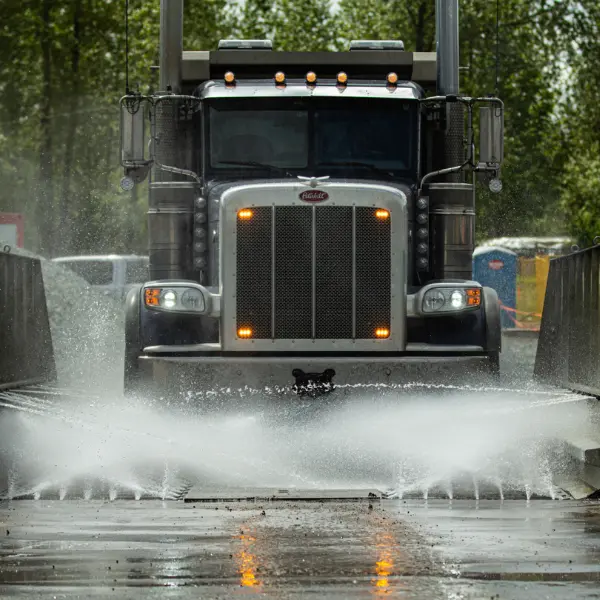
Features of wheel wash machine

Touchless, sensor-based automatic operation or manual activation

High-pressure jet nozzles for wheels and underbody wash

Durable steel grating platform—supports up to 80 tons

Built-in self-cleaning filtration and water recycling system

Fast wash cycle: typically 30 to 60 seconds

Modular design—customizable spray zones and platform length

Truck Wheel and Body Washing System

Types of wheel wash system

Wheel washing systems come in several configurations depending on the site layout, the number of vehicles, and the type of dirt or slurry being removed. Here are the most widely used systems in construction and industrial projects:

Drive-Through Wheel Wash System

A drive-through wheel wash system cleans the wheels and underbody as the vehicle slowly moves across a platform fitted with multiple spray nozzles. The cleaning happens continuously, making it ideal for high-traffic job sites where trucks cannot stop for long. This setup provides fast, consistent cleaning and keeps the site exit free from mud and dust.

Roller-Based Wheel Washing Machine

In this design, the vehicle’s wheels rotate on powered rollers while high-pressure water sprays remove packed mud from every angle. A wheel washing machine with rollers is effective for deep cleaning, especially when trucks carry heavy clay or sticky soil. It works efficiently even in tight spaces because the vehicle stays stationary during the wash cycle.

High-Pressure Wheel Washing System

High-pressure wheel washing systems use strong water jets to remove hardened dirt, cement slurry, and debris from wheels and undercarriages. These systems are commonly used at RMC plants, mining areas, and industrial sites where standard spray systems are not strong enough to clean heavy buildup.

Portable or Mobile Wheel Wash Units

Portable wheelwash units are designed for temporary or frequently shifting job sites. They are easy to install, operate, and relocate, making them ideal for short-duration construction work, small excavation jobs, or rental applications. Despite being compact, they offer effective cleaning and require minimal civil work.

Technical Specifications of wheelwash (Typical Range)

ParameterSpecification
Pump Pressure3–6 bar
Flow Rate200–400 LPM
Platform Length4 to 8 meters
Load CapacityUp to 80 tons
Control SystemPLC-based / Timer-operated
Recycling Tank5,000–10,000 liters

Applications of Wheel Washers

Construction site wheel wash

Reduces mud tracking and dust pollution from construction vehicles at entry and exit points.

Mining and quarrying areas

Prevents sludge and particulate carry-out from mine trucks, ensuring compliance with CPCB norms.

Ready-mix concrete plants

Removes cement slurry and residue from mixer trucks to avoid hard surface damage and fines.

Power plants and steel factories

Cleans industrial dust and metallic debris from heavy-duty equipment before road use.


Waste management and landfills

Eliminates organic waste carryover, preventing environmental contamination and road mess.

Industrial zones and manufacturing plants

Removes process dust and site residues from trucks and forklifts, ensuring cleaner logistics and regulatory compliance.

Benefits of Wheel Washing Systems

Reduce mud on roads – Effectively controls vehicle mud tracking to keep public roads clean and safe.
Comply with environmental regulations – Meets all local and national standards for pollution and environmental safety.
Prevent soil contamination – Stops harmful runoff from spreading, protecting surrounding soil quality.
Minimize dust pollution – Significantly reduces airborne dust for a healthier, more breathable work environment.
Improve worksite cleanliness – Maintains a clean, organized site by removing dirt and debris from vehicles.
Minimize dust pollution – Significantly reduces airborne dust for a healthier, more breathable work environment.

Why Choose Us for Wheel Washing Systems?

Specialists in Wheel Washing Systems
We supply reliable, heavy-duty wheel wash systems for construction, mining, and industrial sites.
Water-Saving Recycling Technology
Each system includes efficient filtration and recycling to reduce water usage.
High-Performance & Durable Design
Our wheelwash solutions are engineered for continuous operation and tough site conditions.
Pan-India Installation & Support
We provide quick delivery, setup, AMC, and technical support across India for all wheel washing machines.
Custom Configurations Available
We offer fixed, portable, and drive-through wheel washing system designs to match any site layout.
Trusted by Leading Contractors
Our Wheel Washers are used by top construction and industrial companies for reliable dust and mud control.

FAQs 

How much water does a system consume per wash?
Depending on the model, each cycle uses 100–300 liters of water. However, most systems include a water recycling tank, reducing net consumption by over 50–70%.
Can the wheel washing machine support heavy dumpers and concrete trucks?
Yes. Our wheel washing machine platforms can handle loads up to 80–100 tons, suitable for dumpers, cement mixers, and loaders
What is the maintenance required for a wheel washing system?
Minimal. Our systems include self-cleaning filters and sludge removal features. Routine checks on nozzles and tanks are recommended monthly.
Do you provide installation and after-sales support?
Yes. We offer turnkey installation across India, along with AMC (Annual Maintenance Contract) options, spare parts, and technical support.
How long does installation take?
Typically, installation takes 3–7 working days, depending on site preparation, civil work, and system type (fixed vs. portable).
How long does a wheel washing machine take to clean a vehicle?
Most wheel washing machines complete a cleaning cycle in 30–60 seconds, making them suitable for high-traffic sites with continuous vehicle movement.
Does a wheel washing system help reduce dust pollution?
Yes. A properly installed wheel washing system removes mud and loose dirt before a truck leaves the site, significantly reducing dust pollution and improving overall air quality.
What civil work is required before installing a wheel washing machine?
Before installing a wheel washing machine, you need a level surface, electrical supply, drainage pit, and space for the recycling tank. The foundation work ensures stability and long-term performance.
Does a wheel washing system damage tires or vehicle parts?
No. A properly calibrated wheel washing system uses controlled water pressure that removes dirt without harming tires, rims, or underbody components. It is safe for all heavy vehicles.
Can a wheel wash system run in low-water areas?
Yes. Many wheel wash systems are designed with efficient recycling units, allowing them to work even in sites with limited water supply.
For Spray Nozzles: +91 94442 75778
For Spraying Systems and
Dust suppression system: +91 86100 00128
© 2023 All Rights Reserved | Synergy Spray Systems | Powered by Ingenium Digital