
DRY FOG DUST SUPPRESSION SYSTEM

DFDS System
Synergy Spray Systems is a trusted manufacturer, supplier, and integrator of high-performance dry fog dust suppression system (DFDS) and dry fog nozzles in India. Our dry fog dust control system is engineered to effectively control airborne dust at the source, significantly improving air quality and reducing environmental pollution in industrial operations.
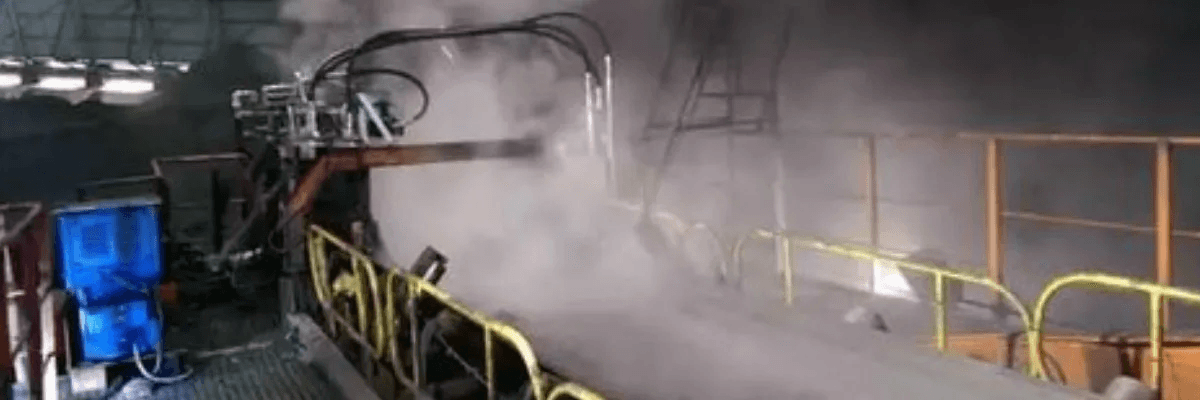
Dry fog dust suppression works by atomizing water into ultra-fine droplets that resemble fog. These tiny droplets, when released near dust-generating points, combine with dust particles—particularly respirable dust (PM10 and PM2.5)—causing them to settle without wetting the surrounding surfaces. These systems are often referred to as DFS or DFDS (Dry Fog Dust Suppression) Systems.
How Dry Fogging Dust Suppression Systems Work
A dry fogging dust control system operates using a carefully balanced mix of low-pressure water and compressed air, delivered through ultrasonic or air atomizing nozzles. This process produces a fog with droplet sizes ranging from 10 to 30 microns, ideal for binding fine dust particles.
The dry fog dust suppression unit design is tailored based on dust particle size, environmental factors, and application zones. These systems provide a cost-effective, eco-friendly alternative to conventional dust extraction setups, especially in bulk material handling plants where traditional systems may be impractical or cost-prohibitive.
Dry fogger dust suppression system provides an advanced and eco-friendly solution for controlling airborne dust in industries like mining, cement, power plants, and bulk material handling. Unlike traditional water spraying systems, dry fog technology uses ultra-fine water droplets to capture dust without wetting the material or causing operational issues.
Benefits of Dry Fogging System in Industrial Dust Control
Unlike traditional water spraying systems, dry fog systems uses minimal water—typically 2.1 to 5.0 liters per nozzle per hour—adding less than 0.5% moisture to the material. This makes it ideal for industries where maintaining material integrity is critical.
Our dry fog nozzles are built to international standards and can be easily customized for site-specific conditions. The latest-generation nozzles feature integrated resonators for enhanced atomization and universal mounting, ensuring compatibility with existing dust suppression setups.
Advantage of Dry fog Dust suppression System
- Reduced raw material wastag
- Prevents dust exposure to operating personne
- Reduce Dust pollution on the plant surroundings
- Extends machinery life
- Minimum water usage : Increase the moisture/humidity in the material by less than 0.5%
- Wide Industrial Application and material handling machineary applications
Application of Dry Fog Dust Control
Synergy Spray Systems has installed industrial dry fog dust suppression system solutions across various industrial facilities to improve environmental conditions.
Dry Fogging Technology are used in following Industries
- Cement Plants
- Thermal Power Plants
- Coal Handling Plants
- Iron and Steel Plants
- Mines
- Glass Manufacturing
- Minerals Processing Units
- Blue Metal processing units
- Crusher Plants
Dry fog DSS are used in following equipments
- Wagon Tippler System
- Truck Tippler System
- Conveyor Belts
- Crusher machines
- Grizzly Hopper
- Covered Coal Yard
- Heavy material moving machines
- Fly Ash Silos
- Material unloading Chute
How to Choose the Right Dry Fog Nozzle for Dust Suppression

- Proven Industrial Applications
Our dry fogger dust control equipment is successfully deployed in coal handling plants, cement industries, power plants, and bulk material handling facilities. - Advanced Dry Fog Dust Suppression Technology
We use proven dry fog dust suppression technology with twin-fluid atomization to generate ultra-fine droplets below 10 microns for effective PM10 and PM2.5 dust control. - Minimal Water Consumption
Dry fog systems consume very low water—typically adding less than 0.5% moisture—helping protect material quality and reduce operating costs. - End-to-End Engineering Support
From system design and customization to installation and after-sales support, we deliver complete dust suppression solutions tailored to site-specific requirements.
FAQs – Dry Fog Dust Suppression Systems
What is dry fog?
Dry fog is the phenomenon where the spray droplets produced by atomized fog nozzles are 5 to 20 microns in size. Dry fog systems are desired and implemented in application which requires no increase in moisture or humidity.
Will dry fogging for dust control wet the surrounding area?
No, dry fog will not cause wetness as it uses a minute quantity of water. It increase the humidity less than 1% based on application.
What is the water pressure required for a dry fogging dust suppression system?
It requires approximately 3 to 5 bar (45 to 75 psi) of pressure for the water and air compressor pressure to be 3 to 5 bar based on application
What is the water quality required for a dry fog dust suppression unit?
Water should be clean and free from harmful contaminants. A pre-filter required as part of the system. Foreign particles in the water system may clog the nozzle orifice
Does wind effect the direction of the fog?
Mildly. since the dry fog system is forced a medium pressure, wind effects the direction of the fog mildly.
What water pump is used in a dry fog dust control system?
A medium ragne pressure water pump is used as part of the system.
How big is a micron size in an industrial dry fog dust suppression system?
A micron is a very small unit of measurement. Dry fog droplets typically range between 5–10 microns. For comparison, a human hair is approximately 50–70 microns thick. Dry fog system designs are customized based on the nature of the dust being suppressed
How do I choose the right dry fogger system for my plant?
System selection depends on dust type, material flow rate, enclosure conditions, and application area. A site assessment helps determine the optimal system design.
Does wind affect dry fog dust suppression technology performance?
Moderate airflow can influence fog direction slightly, but proper nozzle placement, enclosure design, and system engineering minimize wind impact.
What maintenance is required for dry fogging systems?
Maintenance is minimal and mainly involves routine filter cleaning, nozzle inspection, and periodic checking of air and water supply components.
Does a dry fogging dust control solution replace dust extraction or bag filters?
Dry fog does not replace bag filters but serves as a cost-effective alternative or complementary solution in areas where dust extraction systems are impractical or expensive.
Articles on this topic
Details to Be Considered While Retrofitting Dry Fog System
Read article
Dry Mist System and its applications
Read article
Foundry Dust suppression and Casting Units
Read article
Dust Suppression System on Bagasse
Read article
Tell us what you need to spray.
And what it needs to do.
Send a product reference, describe your application or share what you know about an existing nozzle.
Not sure about the specifications? Start with what you know.