FAQ – Mist cooling system for ready mix concrete plants
How does a mist cooling system work in an RMC plant?
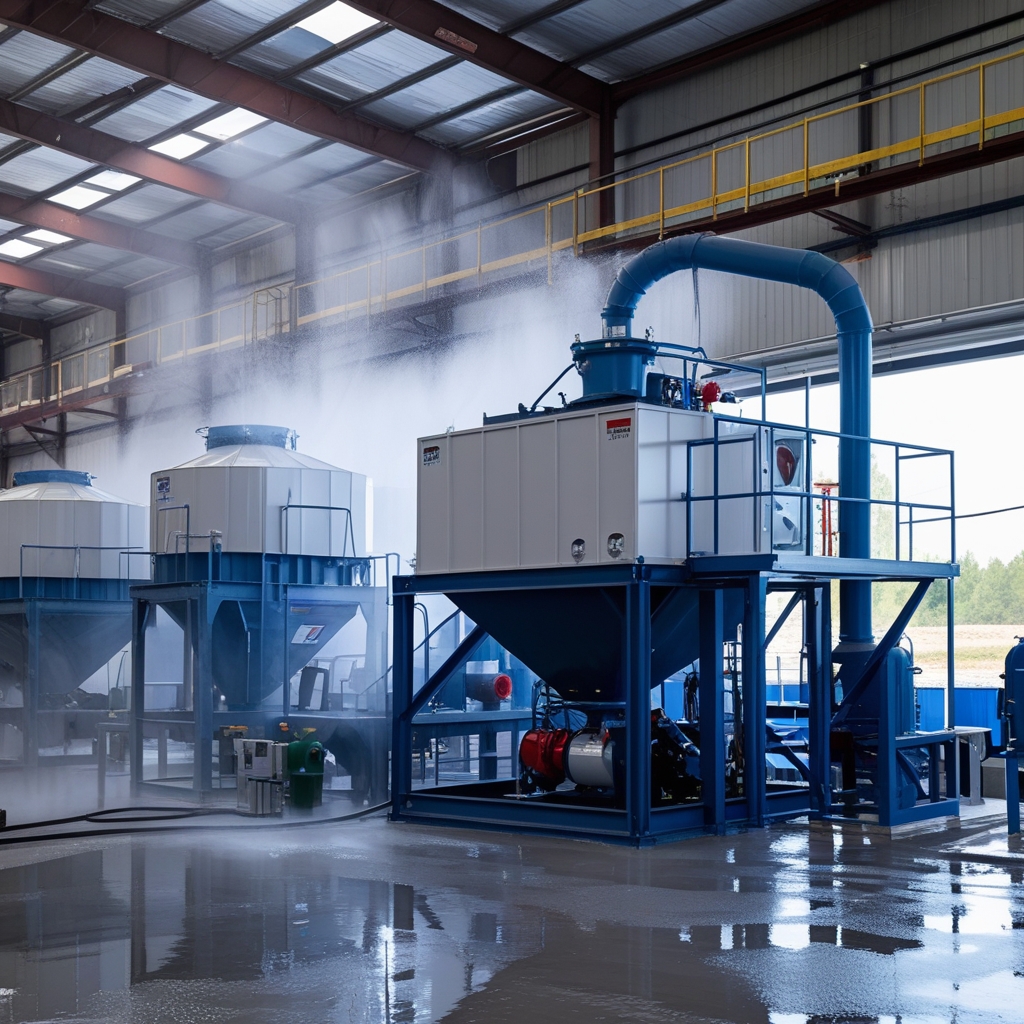
A high-pressure pump atomizes water into ultra-fine droplets through mist nozzles. These droplets help knock down airborne dust near dust sources and can also provide evaporative cooling in suitable open/semi-open areas.
Is misting better than sprinklers for dust control in concrete batching plants?
For many RMC yards, misting can be more efficient because it targets airborne dust near the source using fine droplets, often with lower water usage than broad-area sprinklers. The best choice depends on wind, humidity, dust type, and the area you need to control.
Where should mist nozzles be installed in a concrete batching plant?
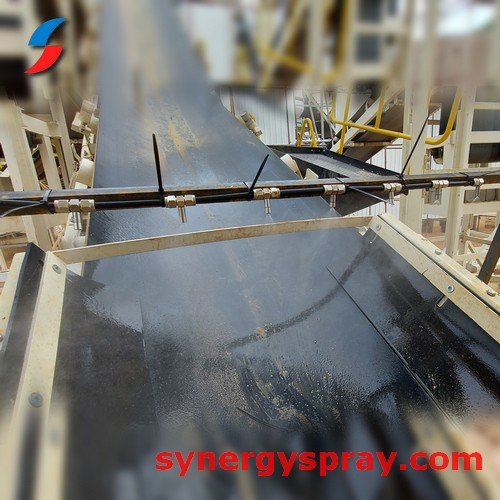
Common high-impact locations include aggregate bins, stockpiles perimeter lines, conveyor transfer points, weigh hoppers, silo intakes, and truck loading zones. A site layout review helps decide nozzle angles, spacing, and zoning.
Will misting make aggregates or cement wet?
A properly designed mist system aims to control dust with minimal wetting by using fine droplets and targeted placement. For sensitive zones, we use controlled zoning and adjust operating cycles to reduce moisture impact.
Does mist cooling work in humid weather?
Evaporative cooling is most effective in hot, dry conditions. In humid climates, you can still use misting primarily for dust suppression, while cooling effect may be moderate.
What droplet size is best for dust suppression in RMC plants?
Very fine droplets are typically preferred for intercepting airborne dust. However, the “best” droplet size depends on dust characteristics, airflow, and placement—so we tune nozzle selection and pressure to match site conditions.
How much water does a high-pressure misting system consume?
Water consumption depends on nozzle flow rate, number of zones, operating cycle time, and the areas covered. Most plants reduce total usage by running only required zones and using timed/sensor-based control instead of continuous spraying.
Do mist nozzles clog? What filtration is required?
Nozzles can clog if water contains sediments or scale-forming minerals. We recommend proper filtration based on your water source and can include anti-scale measures if hardness/TDS is high.
Can the system run automatically based on dust levels?
Yes—automation can be configured using timers and environmental logic (temperature/humidity), and advanced control can be planned for dust-triggered operation depending on sensor selection and site feasibility.
What maintenance is needed for an RMC plant fogging/misting system?
Typical maintenance includes filter checks, periodic nozzle inspection/cleaning, checking pump oil (if applicable), and flushing lines based on water quality. We design systems with isolation valves and service points to simplify upkeep.
Is misting safe around electrical panels and motors?
Mist systems are designed with controlled nozzle direction and zoning to avoid sensitive electrical areas. Proper placement and operating cycles help reduce unnecessary exposure—especially near panels, MCC rooms, and instrumentation.