Synergy Spray System new logo

CFD Analysis for Agglomeration Tank Design

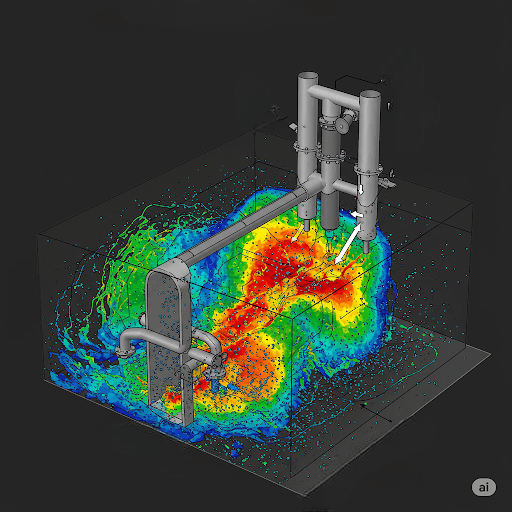
Snergyspray we specialize in advanced CFD analysis for agglomeration tanks with over 10 years of real-world industry experience. Whether you’re in chemicals, food processing, paints, or agrochemicals, our simulations help eliminate performance blind spots—before you build.

Why Use CFD for Agglomeration Tanks?

Designing high-performance agglomeration tanks is complex. Issues like dead zones, poor binder dispersion, or turbulent flow can reduce efficiency and product quality. Physical prototyping is costly and slow.

CFD lets you digitally simulate tank performance early—cutting costs, improving consistency, and ensuring smart engineering decisions from the start.

What CFD-Based Optimisation of Agglomeration Can Reveal?

Flow Pattern Visualization

Flow Pattern Visualization

Identify circulation inefficiencies and eliminate dead zones.

Turbulence & Shear Mapping

Turbulence & Shear Mapping

Optimize impeller speeds to maintain particle integrity while maximizing wetting.

Binder Spray & Coverage Analysis

Binder Spray & Coverage Analysis

Simulate nozzle droplet size, velocity, and spray radius for precise distribution.

Residence Time Distribution (RTD)

Residence Time Distribution (RTD)

Evaluate material retention and achieve optimal agglomerate consistency.

Scale-Up Predictions

Scale-Up Predictions

Accurately forecast behavior during lab-to-plant scale-up without costly rework

Industry-Leading CFD Capabilities

Steady-state & transient simulations
Multiphase modeling (solid-liquid)
Heat transfer & thermal uniformity
Spray and droplet impact studies
Energy efficiency and mixing time optimization

Industry-Specific Benefits of Our Systems

IndustryHow We Help
Chemicals & FertilizersReduce wear, corrosion, and scale-up inconsistencies.
Food & BeverageDesign for hygiene and mixing uniformity in dairy or nutrition lines.
Paints & PigmentsTune shear stress to maintain pigment dispersion without degradation.
AgrochemicalsOptimize binder spray systems to reduce waste and environmental exposure.

Benefits of CFD-Led Tank Design

Reduce physical prototyping costs by up to 40%
Increase product consistency & batch reliability
Enhance energy efficiency and size motors accurately
Decrease commissioning time and process troubleshooting

Why Choose SynergySpray for CFD-Based Agglomeration Tank Design?

10+ years of CFD experience in CFD simulation of particle agglomeration in tanks
Validated CFD models that deliver reliable, real-world performance predictions with high accuracy.
Proven track record with 150+ successful CFD projects across chemicals, paints, agrochemicals, and food industries.
Certified professionals in ANSYS Fluent, OpenFOAM, and COMSOL for accurate multiphase CFD simulations.

FAQ

How accurate are CFD simulations for agglomeration tanks?
With proper validation against physical testing, our CFD models consistently demonstrate strong agreement with real-world behavior, especially for flow patterns, mixing efficiency, and spray coverage.
Can CFD help troubleshoot existing tanks?
Absolutely. We often help clients resolve issues like poor spray coverage, material settling, or low mixing efficiency.
What’s the typical project timeline?
Projects range from 2 to 6 weeks, depending on tank complexity and scope.
What are the steps in CFD analysis?
In further detail, these steps include:

1. Formulate the Flow Problem.
2. Model the Geometry and Flow Domain.
3. Establish the Boundary and Initial Conditions.
4. Generate the Grid.
5. Establish the Simulation Strategy.
6. Establish the Input Parameters and Files.
7. Perform the Simulation.
8. Monitor the Simulation for Completion.
How does CFD help in the design process?
• CFD simulations give engineers clear insights that help optimize design parameters and operating conditions. They assist in:
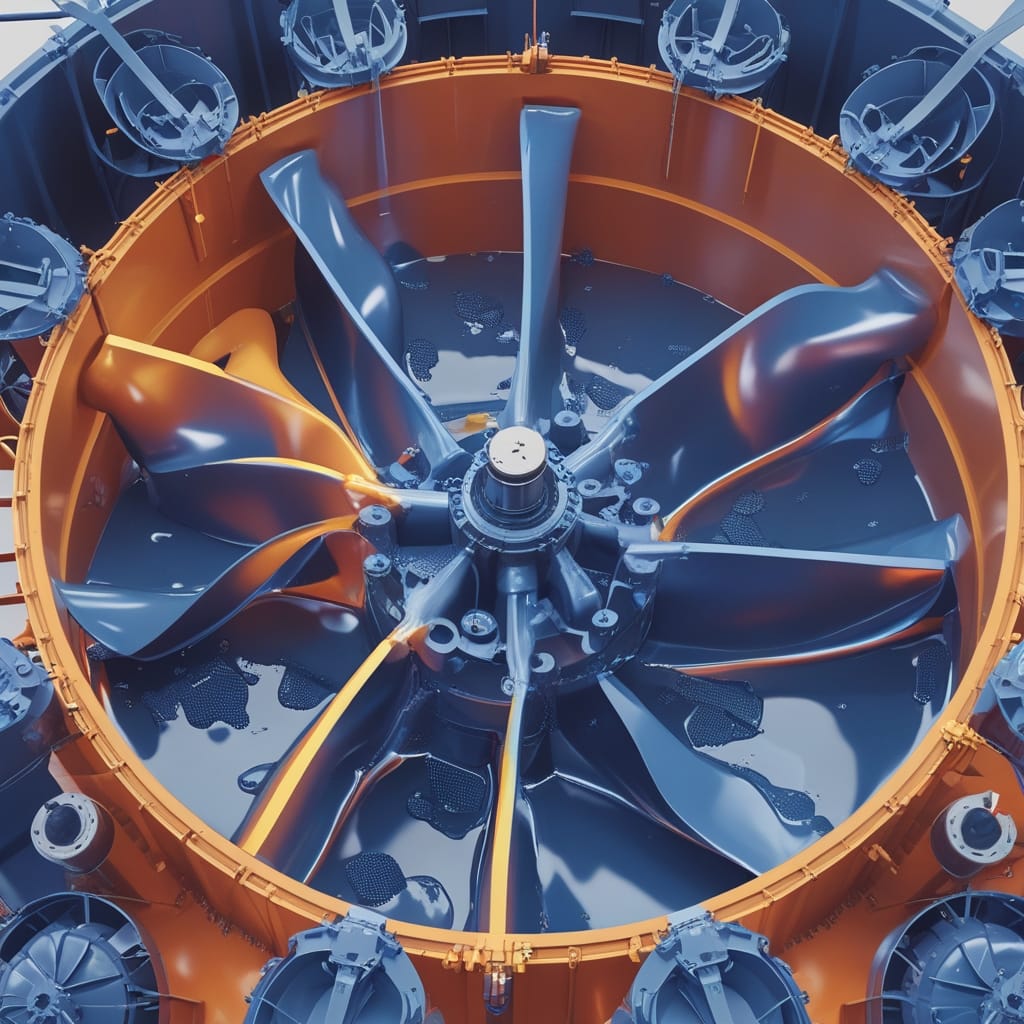
• Optimizing Impeller/Agitator Design: CFD compares different impeller types (such as pitched blade or Rushton turbine) and sizes to achieve the desired shear rates and flow patterns.
• Improving Tank Geometry: It evaluates height-to-diameter ratios, baffle designs, and bottom shapes to improve mixing and reduce dead zones or solid buildup.
• Ensuring Uniform Particle Distribution: CFD shows how solids move inside the tank, helping prevent sedimentation and uneven particle concentration.
• Scaling Up from Lab to Plant: CFD helps predict performance during scale-up, reducing the need for costly and time-consuming experiments
What phenomena can CFD model in an agglomeration tank?
CFD can model many complex processes, often combined with Population Balance Models (PBM). These include:
• Multiphase Flow: Interaction of solids, liquids, and sometimes gases inside the tank.
• Turbulence and Shear Rates: Prediction of turbulence intensity and shear levels that influence particle breakage or growth.
• Heat and Mass Transfer: Temperature and concentration gradients, important for reactions, drying, or spray agglomeration.
• Particle Kinetics: Nucleation, growth, aggregation, and breakage of particles when PBM is coupled with CFD to predict final agglomerate size and shape.
What information is needed to run a CFD simulation?
CFD analysis involves pre-processing, solving, and post-processing. Key inputs required are:
• Geometry Model: A complete 2D or 3D tank model, including impellers, baffles, shafts, and nozzles.
• Material Properties: Density, viscosity, thermal properties, and any other physical properties of the involved phases.
• Boundary Conditions: Operating data such as inlet flow rates, agitator speed, velocities, pressure, and temperature.
• Physical Models: Appropriate turbulence models (like k-epsilon or SST) and multiphase models (such as VOF or the Discrete Phase Model).
What are the limitations of using CFD for agglomeration?
While CFD is powerful, it has some limitations:
• Model Complexity: Agglomeration involves micro-scale flow behavior and chemical processes that are difficult to simulate accurately.
• Dependence on Sub-Models: CFD accuracy depends heavily on the quality of supporting models (like PBM) and reliable experimental data.
• High Computational Demand: Detailed 3D multiphase and PBM-coupled simulations need strong computing power and longer run times.
• Need for Validation: CFD results must be checked against real experimental data to ensure they match real-world performance.
For Spray Nozzles: +91 94442 75778
For Spraying Systems and
Dust suppression system: +91 86100 00128
© 2026 All Rights Reserved | Synergy Spray Systems | Powered by EKA HR Consulting Private Limted
pushpin