Synergy Spray System new logo

NOZZLES FOR FIRE PROTECTION SYSTEM

Protect lives and assets with high-performance fire fighting nozzles & sprinkler solutions engineered for fast suppression, reliable coverage, and code-ready safety.

In a sprinkler system fire fighting setup, the correct spray device is critical for fast fire control and safe evacuation. Fire fighting nozzles and sprinklers fire fighting devices are engineered to deliver water, foam solution, or water mist in the right pattern and density—either to suppress flames directly or to protect equipment and escape routes through cooling and exposure protection.

Modern nozzles and sprinklers for fire fighting systems are used across industrial plants, warehouses, electrical rooms, fuel storage areas, and special hazard zones—where reliable discharge and code-based design are essential.

What Do Fire Fighting Nozzles Do?

Fire fighting nozzles release water, foam, or mist in a controlled spray pattern to:

  • Cool the fire and surrounding surfaces
  • Wet combustibles to reduce ignition spread
  • Shield assets from radiant heat (exposure protection)
  • In water mist systems, rapid evaporation absorbs heat effectively and can reduce oxygen locally near the flame front
NOZZLES FOR FIRE PROTECTION SYSTEM

Exposure Protection & Water Curtain Applications

In specific circumstances, nozzles will be utilized to shield key resources from the impacts of fire yet make no endeavor to really quench the fire. These resources might just be fuel tanks that may represent a blast hazard whenever warmed. On the other hand, the nozzles might be utilized to give a “water curtain” giving a safe course out of space for any individuals caught in a fire zone. The nozzles required for these applications will be moderately high throw out and normally with a more coordinated cone

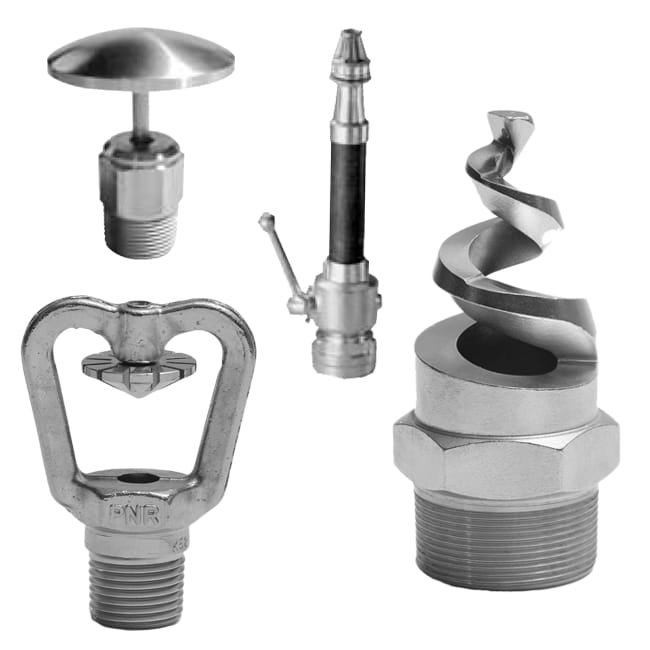
Types of Nozzles and Sprinklers Used in Fire Fighting

Deluge Nozzles

  • Designed for high-volume water flow to rapidly control fires in hazardous environments.
  • Used in oil refineries, chemical plants, and storage facilities.

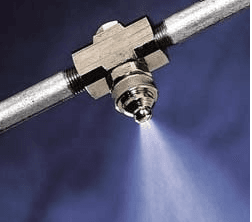
Water Mist Nozzles

  • Generate ultra-fine mist droplets that absorb heat and lower oxygen levels around the fire.
  • Ideal for electrical rooms, data centers, and heritage buildings to minimize water damage.

Spray Nozzles

  • Provide wide-area coverage with controlled water distribution.
  • Used in commercial buildings, warehouses, and industrial spaces

Foam Nozzles

  • Mix foam concentrate with water to effectively suppress flammable liquid fires.
  • Essential for airports, fuel storage tanks, and firefighting vehicles.

High-Velocity Water Spray Nozzles

  • High-velocity water spray nozzles control oil fire hazards by cooling equipment and protecting exposed installations.
  • For gas fires, water jets are used for cooling and exposure protection until the fuel supply is isolated.

Medium-Velocity Nozzles

  • Designed for cooling and containment rather than direct fire suppression.
  • Used in blast furnaces, conveyor belts, and production facilities.

Protective Fire Prevention with Nozzles

Reducing the risk of ignition by pre-wetting high-risk areas.
Increasing air humidity to prevent static buildup in sensitive environments.
Suppressing dust accumulation to lower the chances of combustible dust explosions.

In some cases, nozzles are also used for protecting critical assets rather than extinguishing the fire itself. This includes:

  • Cooling fuel storage tanks to prevent explosion hazards.
  • Creating a “water corridor” to allow safe evacuation from fire zones.

Designing Consideration 1 – Volume of Spray

Downpour systems are basically about conveying an exceptionally huge volume of liquid to the objective region in a quick and supported way. All things considered, high throughput nozzles are by and large required. Deluge / water spray systems are designed to deliver the required discharge density and coverage over the hazard area. Nozzle type, spray angle, spacing, and operating pressure are selected to achieve reliable cooling and fire control—especially for exposure protection of equipment and structures.

Volume of Spray
Egulatory/Protection Necessities

Designing Consideration 2 –Egulatory/Protection Necessities

As downpour systems are regularly fire wellbeing systems inside controlled industries like petrochemical plants, there are frequently guidelines and confirmations that should be met or accomplished. Synergy systems can provide the appropriate solutions.

Why Choose Synergy Systems for Fire Protection Nozzles?

Synergy Systems provides high-performance fire protection nozzles engineered to meet the demands of industrial, commercial, and residential fire suppression systems. Our solutions ensure:

Fluid Mixing & Agitation Solutions

FAQ

How do fire protection nozzles work?

Fire protection nozzles release water, foam, or mist in a controlled spray pattern to suppress or extinguish fires by cooling, displacing oxygen, or smothering flames.

What are the main types of fire protection nozzles?

• Deluge Nozzles – High-volume discharge for hazardous areas.
• Water Mist Nozzles – Fine mist for minimal water damage.
• Spray Nozzles – Wide-area water distribution.
• Foam Nozzles – Effective for flammable liquid fires.

How do I choose the right fire nozzle?

Consider the fire hazard type, required coverage, water supply pressure, and compliance with NFPA standards.

What maintenance is needed for sprinkler and nozzle systems?

Typical maintenance includes periodic inspection for corrosion, blockage, misalignment, valve function checks, line flushing (where applicable), and confirming the system meets the inspection/testing schedule required by your standards or AHJ.

Can foam nozzles be used for diesel or petrol fires?

Yes. Foam nozzles are commonly used for flammable liquid hazards because foam forms a blanket that suppresses vapors and reduces re-ignition risk. Correct foam type and proportioning are important.

What are fire extinguisher nozzles used for?

Fire extinguisher nozzles shape and control the discharge pattern (stream/spray/fog) from portable extinguishers or hose lines so the agent reaches the fire effectively and safely.

Do fire fighting nozzles require strainers or filters?

Yes, strainers/filters are recommended—especially for mist and small-orifice nozzles—to prevent clogging and ensure consistent spray performance.

How do I select the correct spray angle for fire fighting nozzles?

Spray angle depends on the target area, mounting distance, and required overlap to achieve the design discharge density. Wider angles suit closer mounting; narrower angles suit longer throws.
For Spray Nozzles: +91 94442 75778
For Spraying Systems and
Dust suppression system: +91 86100 00128
© 2023 All Rights Reserved | Synergy Spray Systems | Powered by Ingenium Digital