
Mining Vacuum Machines – Industrial Suction Systems for Mining & Quarry Operations
Efficiently extract dust, slurry, ore particles, and hazardous material spills from mining environments with our robust Mining Vacuum Machines—engineered for heavy-duty use in underground and surface mines.These Mining suction systems are designed to support safer, cleaner work zones in processing areas, tunnels, conveyors, and loading points.
What are Mining Vacuum Machines?
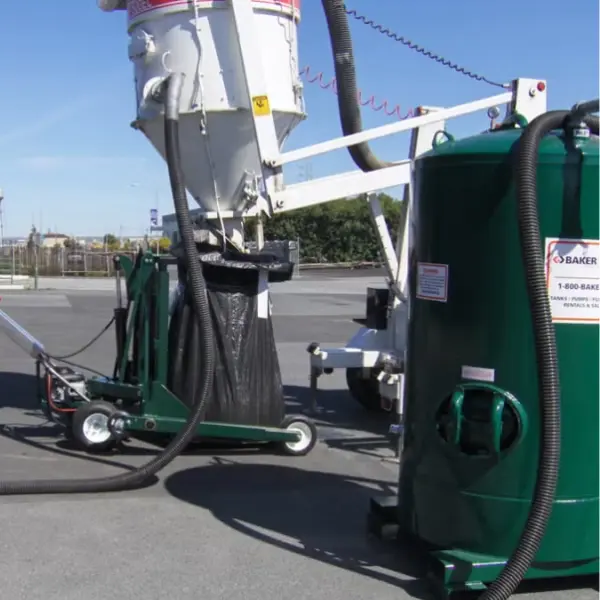
Mining Vacuum Machines are industrial-grade vacuum systems designed to handle heavy solids, fine dust, slurries, and debris commonly found in mining operations.A Heavy duty mining vacuum machine uses high vacuum and airflow to remove material from confined spaces, plant floors, conveyor galleries, and maintenance pits—helping reduce buildup, improve housekeeping, and support safer operations.
In many sites, the system is used as an Industrial mining vacuum cleaner for continuous cleanup around crushers, screens, transfer points, and loading bays.
Key Features of Our Mining Vacuum Systems
- High airflow suction up to 8000 m³/h for bulk material handling (available on selected models/configurations)
- Handles both wet and dry waste in rugged conditions
- ATEX-certified / explosion-proof options for coal and gas zones
- Available in skid, trolley, or trailer-mounted formats
- Equipped with HEPA, cyclone, or cartridge filtration
- Durable SS/MS tanks for abrasive and corrosive media
Technical Specifications
| Parameter | Specifcations |
|---|---|
| Suction Pressure | Up to 30,000 Pa (selected models) |
| Airflow Volume | 3000 – 8000 m³/h |
| Tank Capacity | 500 – 5000 liters (trolley to trailer-mounted range) |
| Operation Modes | Electric / Diesel / Pneumatic |
| Compatible Materials | Dust, slurry, sand, fines, ore residue |
| Mounting Options | Skid / Trolley / Trailer |
| Filtration | HEPA / Cyclone / Cartridge |
| Discharge Options | Manual, hydraulic lift, or tipping |
Benefits of a High Suction Industrial Vacuum System in Mines
- Helps reduce airborne dust during cleanup and improves housekeeping in high-dust zones
- Reduces breakdowns caused by material buildup on equipment
- Helps maintain environmental compliance in processing and loading zones
- Enhances worker safety and reduces manual cleaning efforts
- Allows quicker turnaround during clean-up and maintenance cycles
- Ensures continuous production with less downtime and site disruption
Applications of Industrial Vacuum Systems for Mining
Ore Spillage Cleanup from Conveyors & Crushers
Recovers valuable material and reduces slipping hazards.at transfer points
Dust Extraction in Underground Tunnels and Shafts
Minimizes respirable dust and improves underground visibility.
Coal, Iron Ore, or Mineral Dust Suction
Controls fugitive dust and particulate buildup around machinery.
Slurry and Tailing Pit Vacuum Removal
Safely removes wet waste to prevent overflow and environmental damage.
Routine Plant Maintenance & Debris Collection
Keeps walkways, platforms, and equipment areas clean for safe operations.
Cleanup During Drilling, Excavation & Blasting
Speeds up turnaround by removing debris after drilling and blasting phases.
For open areas, our Surface mining vacuum machines are commonly selected where spillage, dust buildup, and slurry cleanup are recurring issues. In quarry sites, the same solution works as a Quarry vacuum cleaning machine for crusher lines, stockyard edges, and conveyor galleries.For large site cleanup, a zoned setup can be used as a Mining waste vacuum removal system to collect and discharge material efficiently based on operating cycles and pit/yard layout.
Why Choose Our Industrial Suction Machines for Mining Operations
- Our vacuum systems are field-tested in active mines, built to withstand abrasive, corrosive, and high-volume material loads.
- Built using abrasion-resistant components for long-term uptime
- Electric or diesel-powered for off-grid use
- Integrated dust containment and filtration systems
- On-site training, AMC support, and remote diagnostics included
- Compatible with plant SCADA/PLC integration for monitoring
- Proven installations in mining hubs across India and abroad
FAQs about Mining Slurry Vacuum Machine
Can the system handle both wet and dry material?
Yes, our machines are dual-mode, ideal for slurry, sludge, coal dust, and dry ores.
Is it suitable for confined spaces?
Absolutely. We offer remote suction arms and hose reels designed for narrow shafts, bins, or pits.
How do you dispose of collected material?
Vacuum tanks can be discharged via manual tipping, hydraulic lift, or integrated piping systems.
What is the power source?
Options include electric (3-phase), diesel engine, or pneumatic systems depending on your mine infrastructure.
Is explosion protection available?
Yes. For coal or gas-prone zones, we offer ATEX-rated explosion-proof vacuum models.
What filtration is best: HEPA, cyclone, or cartridge?
Cyclone: good as a pre-separator for heavy dust/solids to reduce filter load
Cartridge: common for industrial dust; good balance of cost and performance
HEPA: for very fine dust control and high-safety cleanup (as required by site policy)
How do you prevent filter choking in heavy dust areas?
Using a cyclone/pre-separator, correct filter sizing, pulse-cleaning (if provided), and avoiding wet dust into dry filters helps. Proper maintenance schedules and keeping the system dry/clean are key.
Can the system collect wet slurry and dry dust in the same machine?
Some wet/dry models can, but switching modes must be done correctly. Wet slurry can clog dry filtration if not configured properly. Many sites use different filters or dedicated setups depending on duty.
What tank size do I need for mining vacuum equipment?
Tank size depends on how frequently you want to discharge and how much material you collect per shift. For continuous production areas, larger tanks reduce discharge frequency; for mobile cleanup, compact tanks improve maneuverability.
Can a quarry vacuum cleaning machine handle abrasive materials without rapid wear?
Yes, if it’s designed with abrasion-resistant bends, liners (where applicable), and rugged tanks. Wear depends on particle hardness, velocity, and duty cycle—so component selection matters.
Let's define the right requirement.
Know the product? Request a quote. Working from a process problem? Share the details you have, such as the liquid, pressure, flow, coverage and installation, and our engineers will review it.